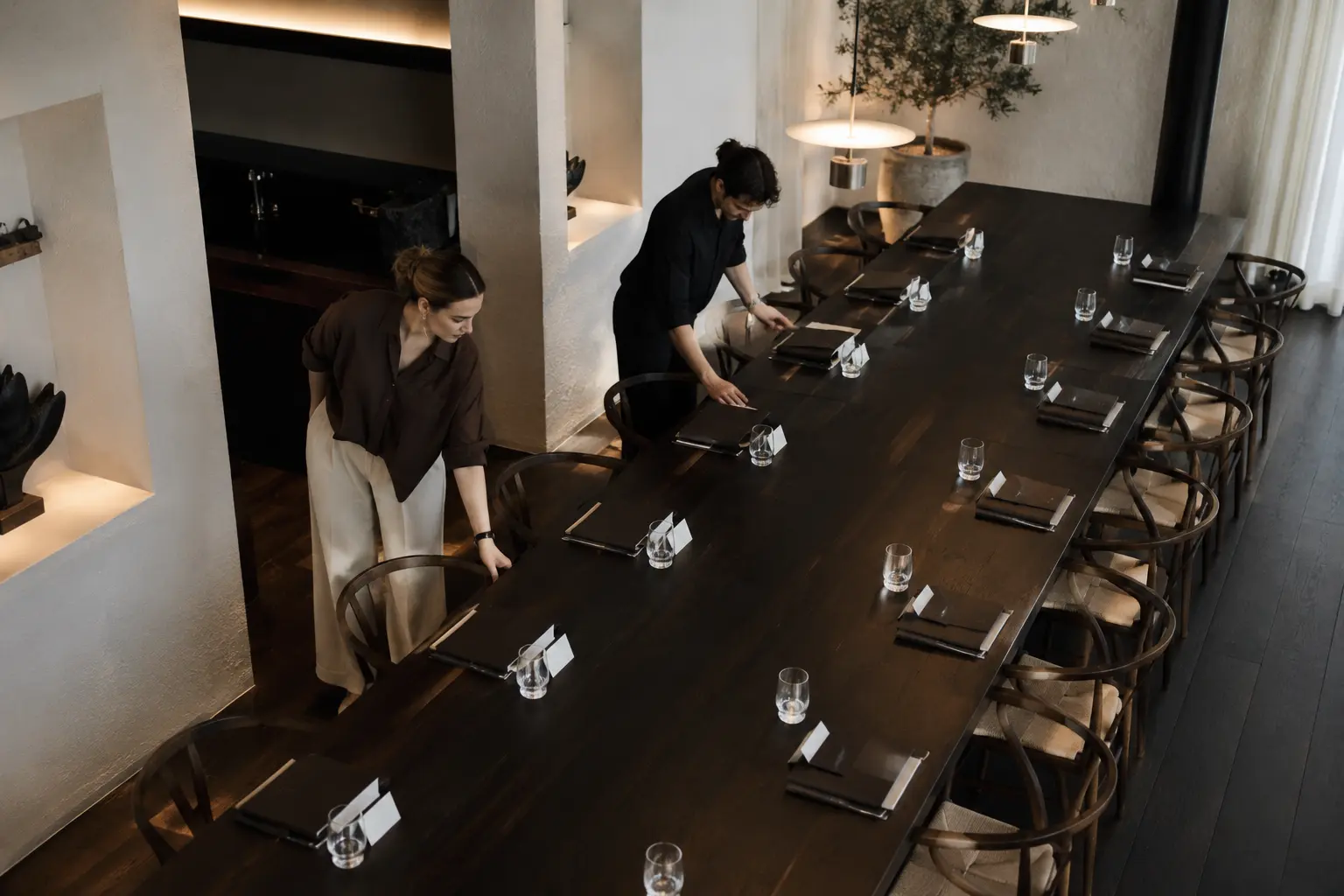
Create the promise, mix, format and follow-through for a room that earns repeat attention.
A valuable room is not an event with good people in it. It is a designed environment that helps the right people make useful progress together.
For established businesses, in-person rooms can do what digital campaigns often cannot: create trust, surface commercial context and let potential clients experience how the business thinks before they buy.
AI should support that experience, not replace it. Use it to reduce the administrative work around the room, improve curation and preserve useful context so the human conversation can stay human.
Is the room an asset or another event?
A room is difficult to compound when these problems are present.
- The promise is networking rather than a specific form of progress.
- The guest list is driven by capacity instead of contribution and fit.
- Invitations are generic because the organiser lacks relationship context.
- The best conversations disappear once everyone leaves.
- Follow-up is delayed, inconsistent or disconnected from what happened.
- Nobody can explain how the room supports clients, talent, partnerships or the team.
Give people a reason to enter this room.
The promise should name who the room is for, the tension they share and the progress the format makes possible. A strong promise helps the right person recognise themselves and gives the organiser a reason to say no to poor fit.
Avoid promising access to impressive people. Promise the quality of thinking, conversation or work the room is designed to produce.
01Design the mix before filling the seats.
Write the guest architecture before the invitation list. Decide which roles, stages, perspectives and forms of experience make the conversation better. Include people who can contribute, not only people who might buy.
Use existing CRM notes, referrals and public context to prepare invitations, but keep selection and final outreach human. The invitation should make it clear why this person belongs in this particular room.
- Define the minimum shared context every guest should have.
- Balance buyers, practitioners and useful adjacent perspectives.
- Avoid direct conflicts that make honest discussion unlikely.
- Reserve space for relationships the business wants to deepen, not just start.
Build a signature moment people can describe.
The room needs a repeatable mechanism, not a packed agenda. It might be a carefully framed problem, matched introductions, a live working session or one question every guest answers from experience.
Brief the host with enough context to connect people thoughtfully. Automate reminders, seating notes and preparation where helpful, then remove the technology from the centre of the room.
- Open with the shared reason everyone is present.
- Create one structured exchange before open conversation.
- Protect time for smaller conversations and useful disagreement.
- Close with the next action, promise or introduction each person wants.
Turn memory into the next useful relationship.
Capture only what the guests reasonably expect the business to remember: promised introductions, requested material, areas of interest and agreed next steps. Do not turn a trusted room into a hidden data-harvesting exercise.
Use AI to organise notes and prepare drafts, then let a person confirm the context and send. The goal is a relevant continuation, not a high-volume sequence.
04The room design test
Answer these before choosing the venue or opening registrations.
- 01
Can the right guest understand the promise in one sentence?
- 02
Does every seat improve the mix or only increase attendance?
- 03
Is there a signature format that produces the promised progress?
- 04
What context does the host need to make better introductions?
- 05
Which follow-up promises must be captured before people leave?
- 06
How will the room strengthen a client, talent, partner or team relationship?
Build this into your working document.
- Room name and one-sentence promise
- Who belongs and who does not
- The recurring problem the room helps solve
- A signature format people can describe
- The next useful action after the room
Design the first room before you announce it.
A clear room on one page is more valuable than an early venue booking.
- Day 1: write the guest, shared tension and one-sentence promise.
- Day 2: define the guest mix and build a short list with a reason for every name.
- Day 3: design the signature moment and the minimum run of show.
- Day 4: prepare personal invitation briefs, reminders and host context.
- Day 5: design the note capture, promised follow-up and relationship handover.
The commercial value of a room is not measured by how many people attended. It is measured by the quality of the relationships, decisions and next actions the room made possible, and whether the business can build on them without losing the human part.
One useful build. Every week.
Short, practical notes on AI systems, useful agents and building stronger relationships around your business.